Cancun on a Budget: Beaches, Food, and Getting Around
In this guide
You do not need an all-inclusive wristband to enjoy Cancun. The same beaches the resorts front are free and public by law, downtown eats better than the Hotel Zone at a fraction of the price, and the local transit network — R1/R2 buses and colectivo vans — moves you around for pocket change. A comfortable budget trip here is very achievable at roughly $50–80 USD per person per day; a disciplined shoestring version can go lower. Here is exactly how the pieces fit together.
Sleep downtown, not on the strip
The single biggest lever in your budget is where you sleep. Hotel Zone rooms commonly start around $150 USD a night and climb fast; downtown (El Centro) has clean guesthouses, hostels, and small hotels in roughly the $25–70 USD range. Base yourself near Parque de las Palapas or along Avenida Tulum and you are walking distance from the best cheap food in the city and the ADO bus terminal, with the beach a 12–15 MXN bus ride away.
We compare the two areas in depth in Hotel Zone vs downtown — the short version for budget travelers is that downtown wins on every line item except waking up next to the sand.
The public beaches (yes, they’re free)
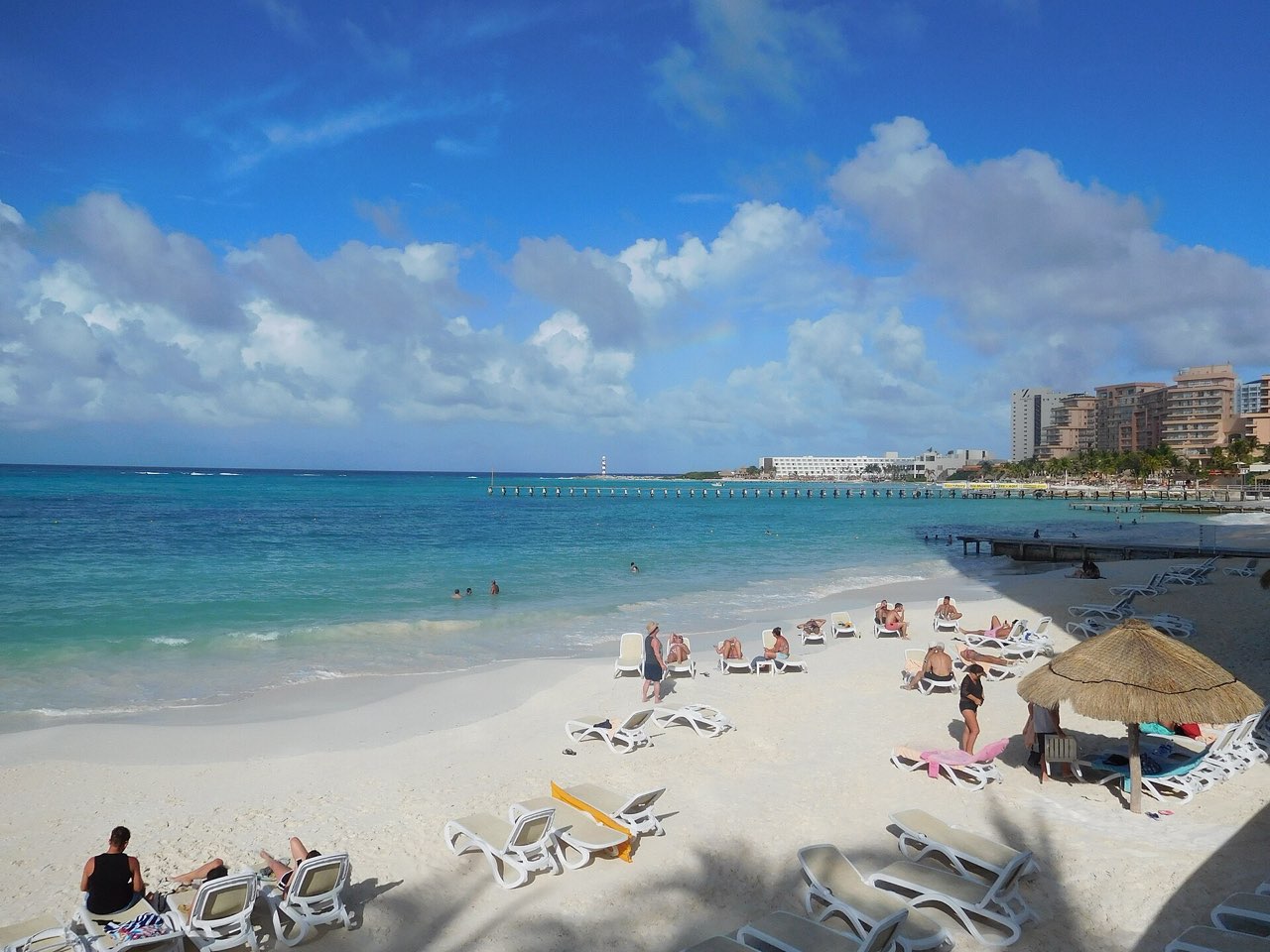
Every beach in Mexico is federal property. Resorts control their own loungers, bars, and towel service, but not the sand or the water, and the Hotel Zone maintains designated public access points with parking, and in some cases free palapas and lifeguards. Bring your own towel and water, and you have the same Caribbean as the $500-a-night crowd.
The ones worth knowing, roughly north to south along Boulevard Kukulcán:
| Beach | Km marker (approx.) | Water | Notes |
|---|---|---|---|
| Playa Tortugas | Km 6.5 | Calm | Ferry dock, food stands, busy and local |
| Playa Caracol | Km 8.5 | Calm | Small, near the party zone |
| Playa Chac Mool | Km 10 | Moderate surf | Easy access, fewer crowds |
| Playa Marlin | Km 13 | Open sea | Wide, beautiful, limited shade |
| Playa Delfines | Km 17.5 | Open sea, strong surf | The famous CANCUN sign, free palapas, lifeguards |
Playa Delfines is the flagship: a huge public beach with no hotels directly on it, free palapas (arrive early to claim one), lifeguards, and the much-photographed colored CANCUN letters. The surf is real — respect the flags. For calm swimming, especially with kids, the north-facing beaches like Tortugas are the better call.
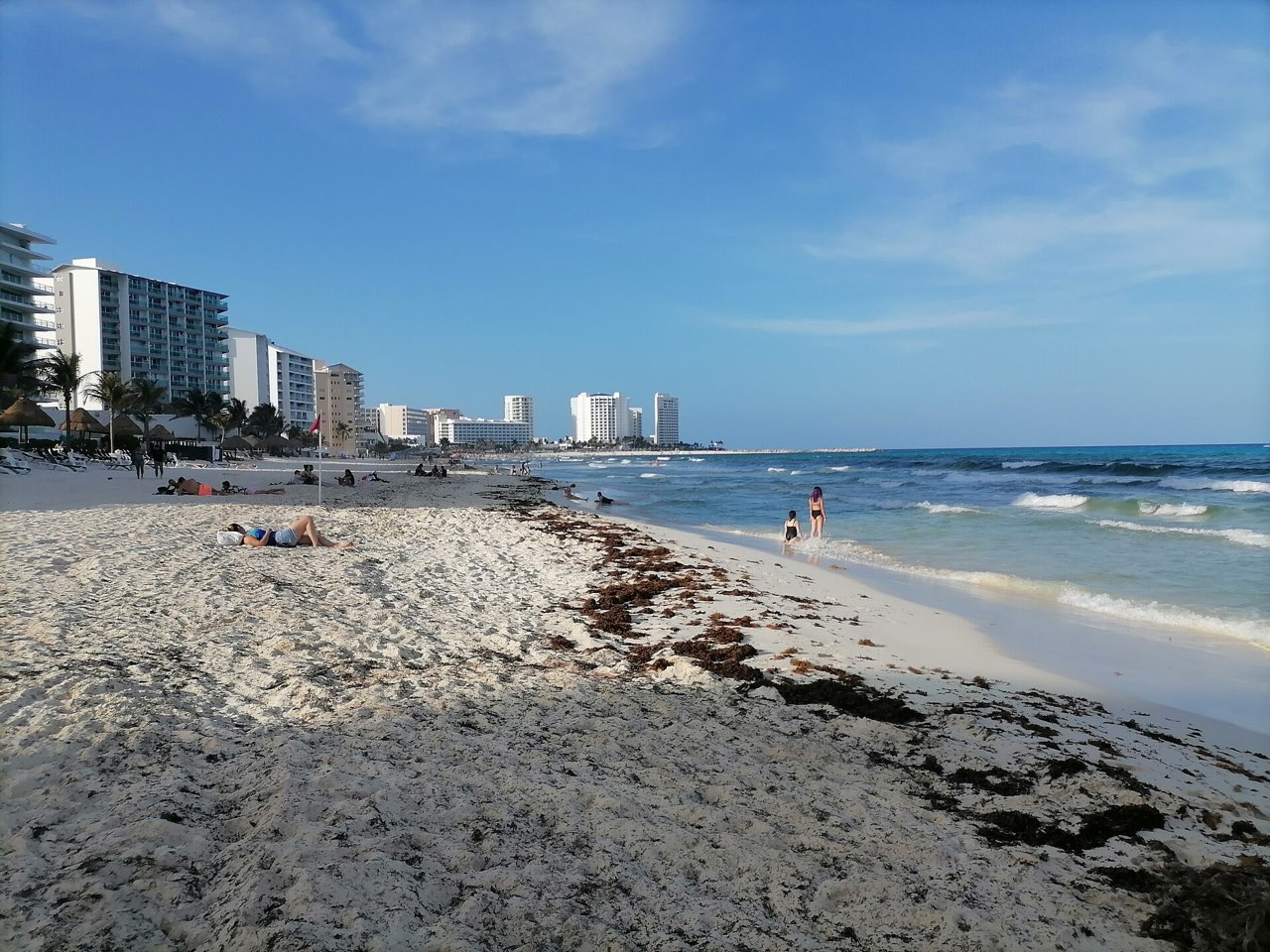
Seasonal honesty: sargassum seaweed can hit Caribbean-facing beaches roughly April through September, varying week to week. North-facing beaches (Tortugas, Caracol) usually fare better than the east-facing ones. Check a recent photo or webcam before committing your one beach day to Delfines in July.
Eat where the city eats
Food is where budget Cancun stops feeling like a compromise and starts feeling like the better trip.
- Parque de las Palapas comes alive in the evening with food stalls: marquesitas (crispy crepes), esquites, tamales, empanadas. Dinner for two for roughly 150–250 MXN.
- Mercado 28 and the streets around it: cochinita pibil, panuchos, salbutes, tortas. The market restaurants are touristy at the center; the gems are the stalls and fondas at the edges.
- Taquerías along Avenida Tulum and Avenida Yaxchilán: al pastor by the handful, roughly 15–25 MXN per taco. Yaxchilán is also the local restaurant-and-cantina strip — order beers and many cantinas keep the botanas (free snacks) coming.
- Comida corrida lunches: set menu of soup, main, drink for roughly 80–130 MXN at small fondas. The best value meal format in Mexico.
Rule of thumb: a busy stall with locals in line beats an empty one with a laminated tourist menu, every time.
Getting around for almost nothing
- R1/R2 buses connect downtown and the Hotel Zone constantly for roughly 12–15 MXN cash. This is your beach commute.
- Colectivos (shared vans) run south along Highway 307 — Puerto Morelos for roughly 45 MXN, Playa del Carmen for roughly 70–90 MXN. They leave downtown from marked stops when full, which at peak times means every few minutes.
- ADO buses from the downtown terminal are the comfortable option for longer hops — Playa del Carmen for roughly 90–150 MXN, and the airport route for roughly 130–150 MXN (see our airport transfer guide).
- Taxis have no meters; agree on the fare before you get in. For solo budget travelers they are the splurge, not the default.
Skip the rental car unless you are specifically doing a cenote road trip. Parking, insurance, and Hotel Zone traffic eat the savings.
Free and cheap things that are actually good
- Beach-hopping the public accesses — the obvious one, and genuinely world-class.
- Parque de las Palapas in the evening — live music, families, food stalls; the city’s living room.
- Isla Mujeres by ferry — not free (580 MXN, roughly $30 USD, round trip on Ultramar from Puerto Juárez, plus 12 MXN of city bus to reach the dock), but a spectacular day for the money. Full logistics in our Isla Mujeres day trip guide.
- El Meco and El Rey ruins — small Maya sites (El Rey is right in the Hotel Zone) with modest entry fees, iguanas included. A fraction of the crowds of the famous sites.
- Mercado 23 — the least touristy market in town; produce, flowers, everyday life, and honest lunch counters.
- A cenote day via colectivo — take a colectivo toward Puerto Morelos and a taxi up the Ruta de los Cenotes; entries run roughly 150–400 MXN. Our cenotes guide covers which ones justify the trip.
A sample budget day (per person, approximate)
| Item | Cost (approx.) |
|---|---|
| Guesthouse bed/room share | $15–35 USD |
| Breakfast (fonda or market) | 60–100 MXN |
| Bus to Playa Delfines, return | 24–30 MXN |
| Beach day (BYO towel + water) | Free |
| Taco dinner + beer, Yaxchilán | 150–250 MXN |
| Evening at Palapas + marquesita | 40–60 MXN |
That is a full Caribbean beach day for roughly $35–55 USD all-in. Swap in a ferry day or cenote day at roughly $20–40 extra and you are still under half the cost of a mid-tier all-inclusive.
Small savings that add up
A few habits compound over a week: refill a water bottle from your guesthouse’s garrafón instead of buying bottles; use bank ATMs and decline the machine’s own conversion rate (always choose to be charged in pesos); buy beach snacks at a supermarket like Chedraui rather than Hotel Zone minimarts; and treat happy-hour boards on Yaxchilán as the aperitif economy they are. Tipping is customary — round up in taquerías, and roughly 10–15% at sit-down places — so fold it into the math rather than getting caught short of small bills.
Where the budget math changes
Two honest caveats. First, drinking in Hotel Zone clubs will vaporize any savings — covers and drink prices are resort-level; the cantinas on Yaxchilán are the budget nightlife. Second, if your trip is short (3–4 days) and 100% beach-focused, a cheap all-inclusive deal in the low season can occasionally pencil out competitively once you count every meal — run the numbers rather than assuming. But for stays of five days or more, or any trip where you want to actually see the region — Playa del Carmen, the islands, the cenotes — the downtown-plus-transit approach wins comfortably, and our 7-day no-car itinerary shows how to stretch it down the whole coast.
Frequently asked questions
Can you visit Hotel Zone beaches without staying at a resort?
Yes. All beaches in Mexico are federal public property, and the Hotel Zone has marked public access points — Playa Delfines, Playa Tortugas, Playa Chac Mool, and others. You cannot use a resort's loungers or facilities, but the sand and sea are free.
How much does a budget day in Cancun cost?
A realistic shoestring day — downtown guesthouse, market meals, bus to a public beach, and a couple of beers — can come in around roughly $40–60 USD per person. Add roughly $20–40 for a paid activity like the Isla Mujeres ferry or a cenote entry.
What is a colectivo and how do I use one?
Colectivos are shared vans that run fixed routes for a flat cash fare, used mainly by locals. From Cancun they run south along Highway 307 toward Puerto Morelos and Playa del Carmen for roughly 45–90 MXN. You flag them down, hop in, and tell the driver where to stop.
Is street food in downtown Cancun safe to eat?
Generally yes, if you use the same judgment locals do: pick busy stalls with high turnover, food cooked hot in front of you, and lines of local customers. Stalls around Parque de las Palapas and Mercado 28 feed thousands of people daily.
Keep planning
- Cancun Hotel Zone vs Downtown: Where to Stay Compared
Hotel Zone or downtown Cancun? We compare price, beach access, food, nightlife, and transport so you can pick the right base for your trip.
Updated Aug 2026 - Cancun Airport to Your Hotel: Every Transfer Option Compared
ADO bus, private transfer, shared shuttle, taxi, or rental car from Cancun airport? We compare cost, time, and hassle, plus how to get past the terminal touts.
Updated Oct 2026 - Cancun to Tulum: Bus, Colectivo, Tren Maya, or Private Transfer
Cancun to Tulum by ADO bus, colectivo, Tren Maya, private transfer or rental car: costs in pesos, travel times, and which option fits your trip.
Updated Oct 2026