Cancun Hotel Zone vs Downtown: Where to Stay Compared
In this guide
If you are choosing between Cancun’s Hotel Zone and downtown (El Centro), the short version is this: stay in the Hotel Zone if the beach is the point of your trip and your budget allows it; stay downtown if you want to spend half as much, eat dramatically better street food, and treat the beach as a bus ride rather than an elevator ride. The two areas are connected by cheap, frequent city buses, so neither choice locks you out of the other — but they are very different places to wake up in.
Here is how they actually compare, category by category.
The two Cancuns at a glance
| Hotel Zone (Zona Hotelera) | Downtown (El Centro) | |
|---|---|---|
| Beach | On your doorstep | 15–40 min by bus |
| Nightly rates (approx.) | Roughly $150–500+ USD | Roughly $30–100 USD |
| Food | Resort restaurants, tourist prices | Markets, taquerías, local prices |
| Nightlife | Clubs and beach bars | Cantinas, Parque de las Palapas |
| Vibe | Purpose-built resort strip | Working Mexican city |
| Best for | Beach-first trips, honeymoons, all-inclusive fans | Budget travelers, food lovers, longer stays |
What the Hotel Zone actually is
The Zona Hotelera is a 22-kilometer barrier island shaped like a “7”, lined almost end to end with resorts, malls, and beach clubs. It was master-planned as a tourism zone in the 1970s, and it shows: this is not a neighborhood that grew organically, it is a strip built for visitors. Addresses are given in kilometers (Km 9, Km 14, and so on), measured along Boulevard Kukulcán.
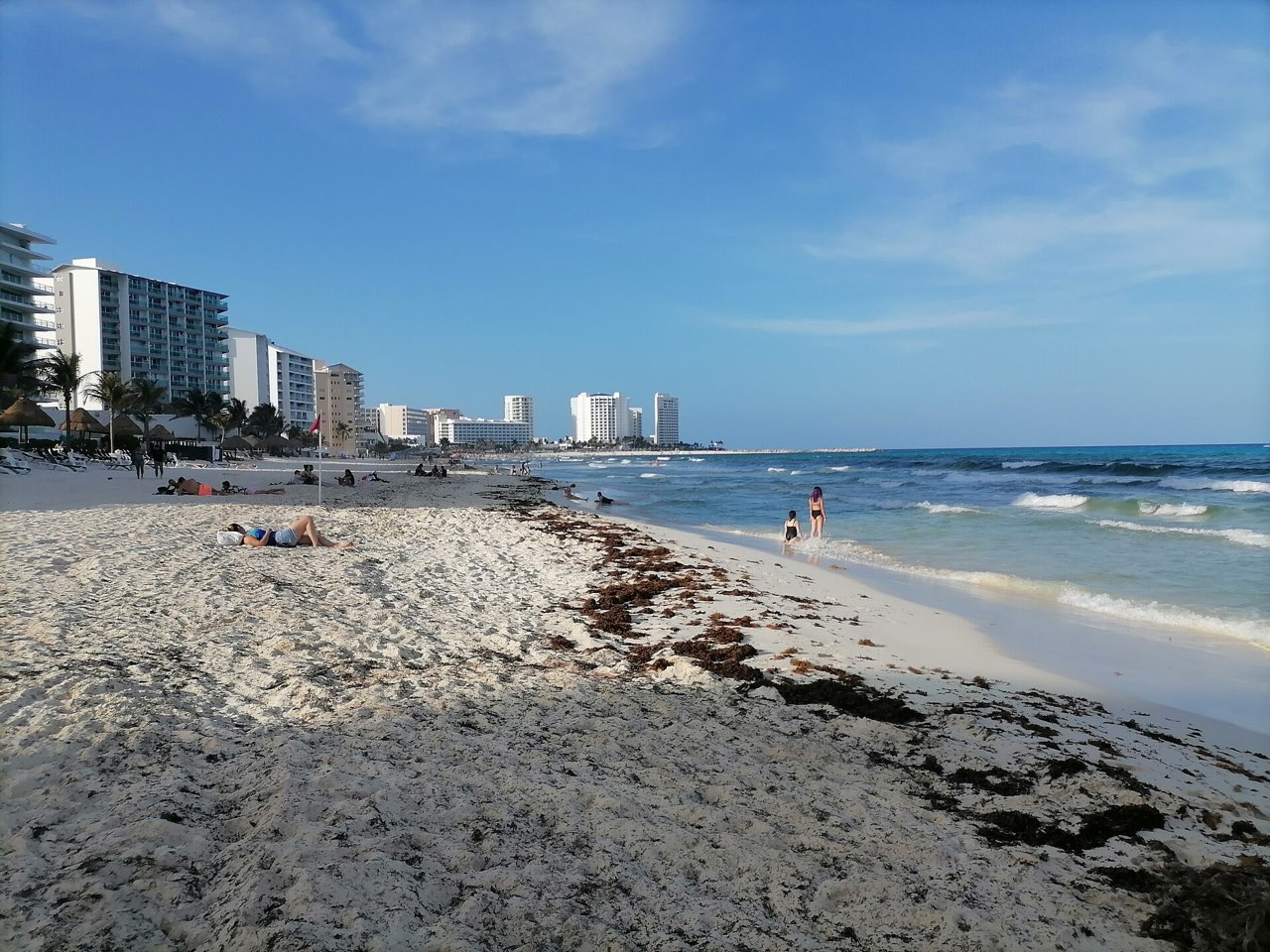
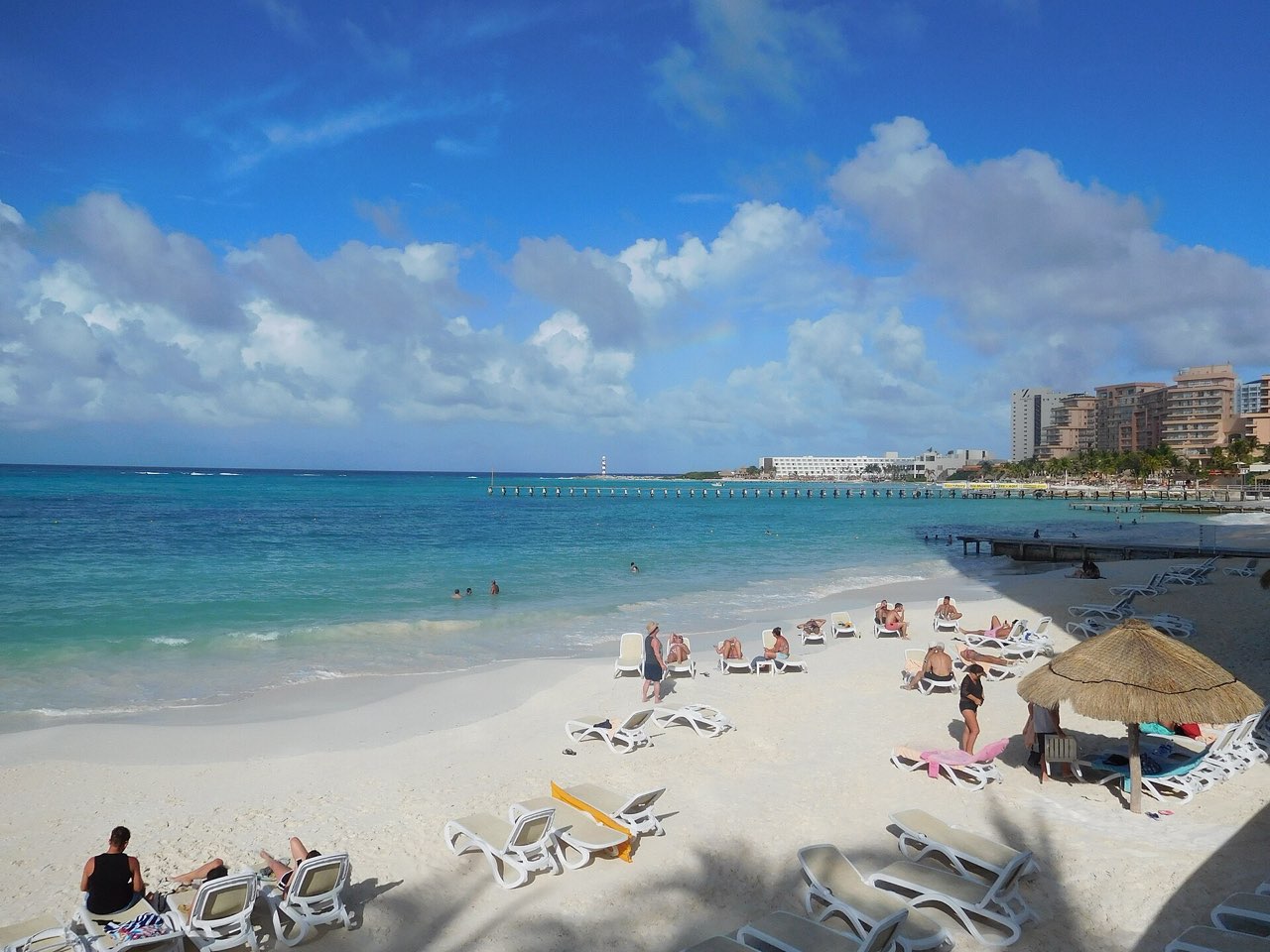
The payoff is the beach. The Caribbean here is the postcard: white sand, impossibly blue water, and on the long east-facing stretch of the “7”, proper surf and open sea. The north-facing beaches (roughly Km 1–9, near Playa Tortugas and Playa Caracol) are calmer and more swimmable; the east-facing beaches (Km 10 onward, including Playa Delfines) are more dramatic but often have stronger currents. Watch the flag system — red means stay out.
Where in the Hotel Zone
- Km 1–9 (the top of the 7): Calmer water, closer to downtown, older hotels, generally slightly cheaper. Good for families.
- Km 9–13 (the corner): The party zone — the big clubs cluster around Km 9. Convenient, loud.
- Km 13–20 (the long leg): The big-name resorts, wide open beaches, quieter at night. You are further from everything and more dependent on the bus or taxis.
Hotel Zone downsides
Prices are the obvious one — not just rooms, but everything. A casual lunch that costs 120 MXN downtown can cost three or four times that at a Hotel Zone restaurant. If you leave your resort to eat, your options are mostly malls and international chains. And outside your hotel there is not much “place” to explore: it is a boulevard, not a town.
One seasonal note: sargassum (brown seaweed) can pile up on Caribbean-facing beaches roughly April through September, with the worst of it usually mid-summer. It varies enormously by week and by beach, and the north-facing Hotel Zone beaches typically fare better than the east-facing ones. Resorts rake their beaches daily, but in a bad week no one escapes it entirely. Hurricane season nominally runs June through November, with the highest historical risk in September and October.
What downtown (El Centro) actually is
El Centro is the real city of Cancun — home to most of the roughly one million people who live and work here. It is not on the beach and it is not pretty in the resort sense, but it is where you find the food, the prices, and the everyday life the Hotel Zone was built to filter out.
The center of gravity for visitors is Parque de las Palapas, a plaza that fills up in the evenings with food stalls, families, and live music. Around it you will find guesthouses, hostels, and small hotels at prices that look like typos next to Hotel Zone rates. Mercado 28 is the sprawling souvenir-and-food market; the surrounding streets hold some of the best cheap eating in the region — cochinita pibil tortas, salbutes, fresh juice stands, and taquerías that stay busy with locals at 1 a.m.
Downtown strengths
- Price. Rooms, food, beer, laundry — expect to spend roughly half of what the same trip costs based in the Hotel Zone, often less. We break the full cheap-Cancun playbook down in our Cancun on a budget guide.
- Food. This is not close. Downtown eats better at every price point below “fine dining.”
- Transit hub. The ADO bus terminal is downtown, which matters if you are continuing to Playa del Carmen or Tulum, and Puerto Juárez — the ferry dock for Isla Mujeres — is a short taxi ride north.
Downtown downsides
No beach, obviously — every beach day starts with a bus or taxi. The city is loud, traffic-heavy, and visually unglamorous. Some blocks feel sketchy at night, as in any city of this size; stay in the central areas and take taxis late. And if you pictured falling out of bed onto white sand, this is not that trip.
Getting between them: the R1 and R2 buses
This is the detail that makes the choice low-stakes. City buses labeled R1 and R2 run between El Centro and the Hotel Zone constantly — often every few minutes during the day — and cost roughly 12–15 MXN (under a US dollar) paid in cash to the driver. The R1 runs along Avenida Tulum downtown and the full length of Boulevard Kukulcán; the R2 connects via Avenida Cobá and Mercado 28. Flag them down anywhere along the route, tell the driver your stop or watch the Km markers, and press the button to get off.
The ride from central El Centro to mid-Hotel Zone takes roughly 20–40 minutes depending on traffic and how far down the strip you are going. Buses run late — well past midnight — though less frequently. Taxis cover the same route but negotiate the fare before getting in; expect roughly 200–400 MXN between downtown and the Hotel Zone depending on distance and hour, and note that ride-hailing availability in Cancun has been contentious and unreliable — treat it as a bonus if it works, not a plan.
Who should stay where
Choose the Hotel Zone if: the beach is the trip; you want an all-inclusive; you are traveling for a honeymoon, anniversary, or short 3–4 day escape where convenience beats cost; you want big-club nightlife; or you are traveling with kids and want pools plus calm north-facing beaches.
Choose downtown if: you are on a budget; you care more about food than beachfront; you are staying a week or more and the nightly savings compound; you are using Cancun as a base or transit point for Isla Mujeres, cenotes, and points south; or you simply prefer real cities to resort strips.
The hybrid move: plenty of travelers split the difference — a few nights downtown eating well and day-tripping, then one or two Hotel Zone nights for the pure beach-resort experience. Nothing stops you; the bus connects the two for pocket change.
The honest bottom line
The Hotel Zone delivers exactly what it promises: one of the best urban beaches in the hemisphere with full resort infrastructure, at prices to match. Downtown delivers Mexico — food, noise, value, and a working city — with the beach a cheap bus ride away. Neither is wrong. Decide what your mornings should look like and book accordingly. And whichever you choose, sort out your arrival first: our Cancun airport transfer guide covers the ADO bus that serves downtown directly and the transfer options that make more sense for the Hotel Zone.
Frequently asked questions
Is it cheaper to stay in downtown Cancun than the Hotel Zone?
Yes, usually by a wide margin. Downtown hotels and guesthouses often run a third to half the price of comparable Hotel Zone rooms, and food and drinks cost far less. The trade-off is that you are 15–30 minutes from the beach.
Can you get from downtown Cancun to the Hotel Zone beaches easily?
Yes. The R1 and R2 city buses run constantly between El Centro and the Hotel Zone, take roughly 20–40 minutes depending on where you are going, and cost around 12–15 MXN per ride. They run late into the night.
Is downtown Cancun safe for tourists?
The central tourist-facing areas of El Centro — around Parque de las Palapas, Avenida Tulum, and Mercado 28 — see plenty of visitors and are generally fine with normal city precautions. Stick to well-trafficked areas at night and use official taxis or buses.
Do Hotel Zone hotels have private beaches?
No beach in Mexico is legally private — all beaches are federal property. Hotels control their loungers and beach clubs, but the sand itself is public, and there are designated public access points along the Hotel Zone.
Keep planning
- Cancun on a Budget: Beaches, Food, and Getting Around
How to do Cancun without an all-inclusive: free public beaches, cheap downtown eats, colectivos, and low-cost activities that locals use.
Updated Oct 2026 - Cancun Airport to Your Hotel: Every Transfer Option Compared
ADO bus, private transfer, shared shuttle, taxi, or rental car from Cancun airport? We compare cost, time, and hassle, plus how to get past the terminal touts.
Updated Oct 2026 - Cancun to Tulum: Bus, Colectivo, Tren Maya, or Private Transfer
Cancun to Tulum by ADO bus, colectivo, Tren Maya, private transfer or rental car: costs in pesos, travel times, and which option fits your trip.
Updated Oct 2026